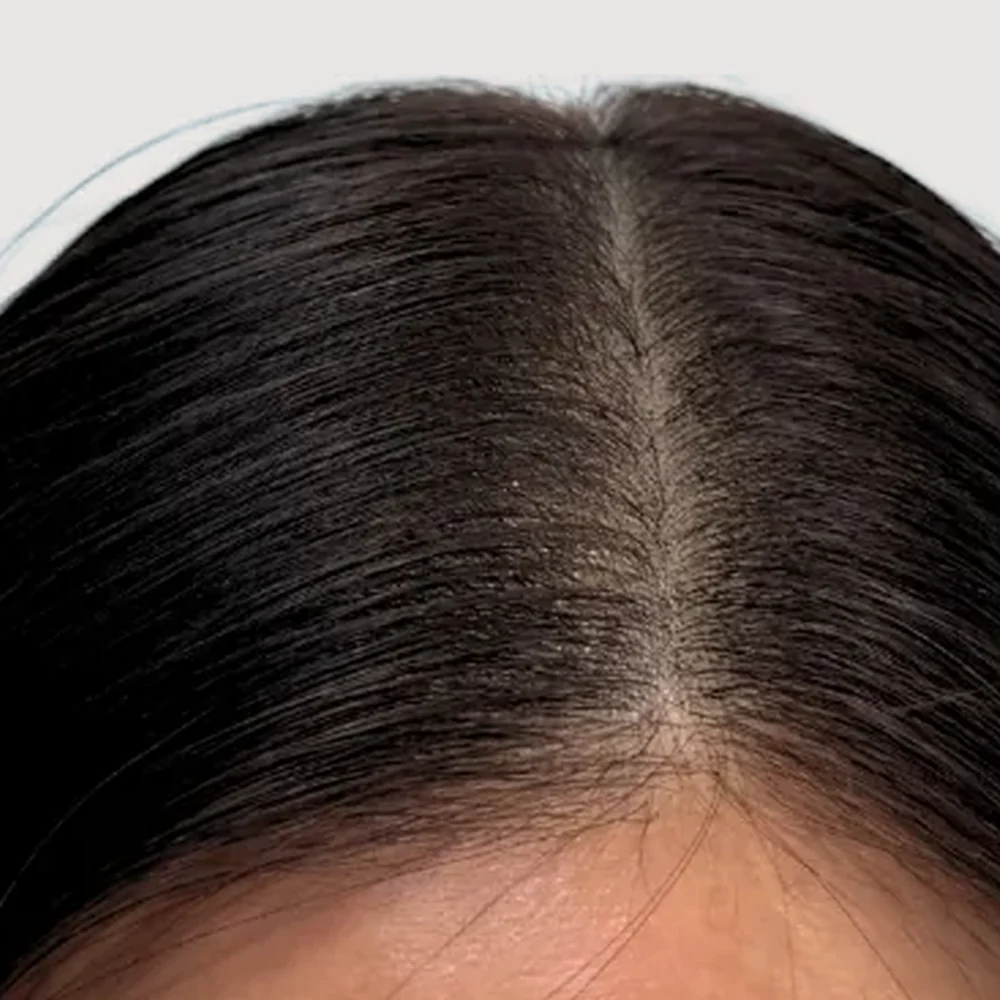
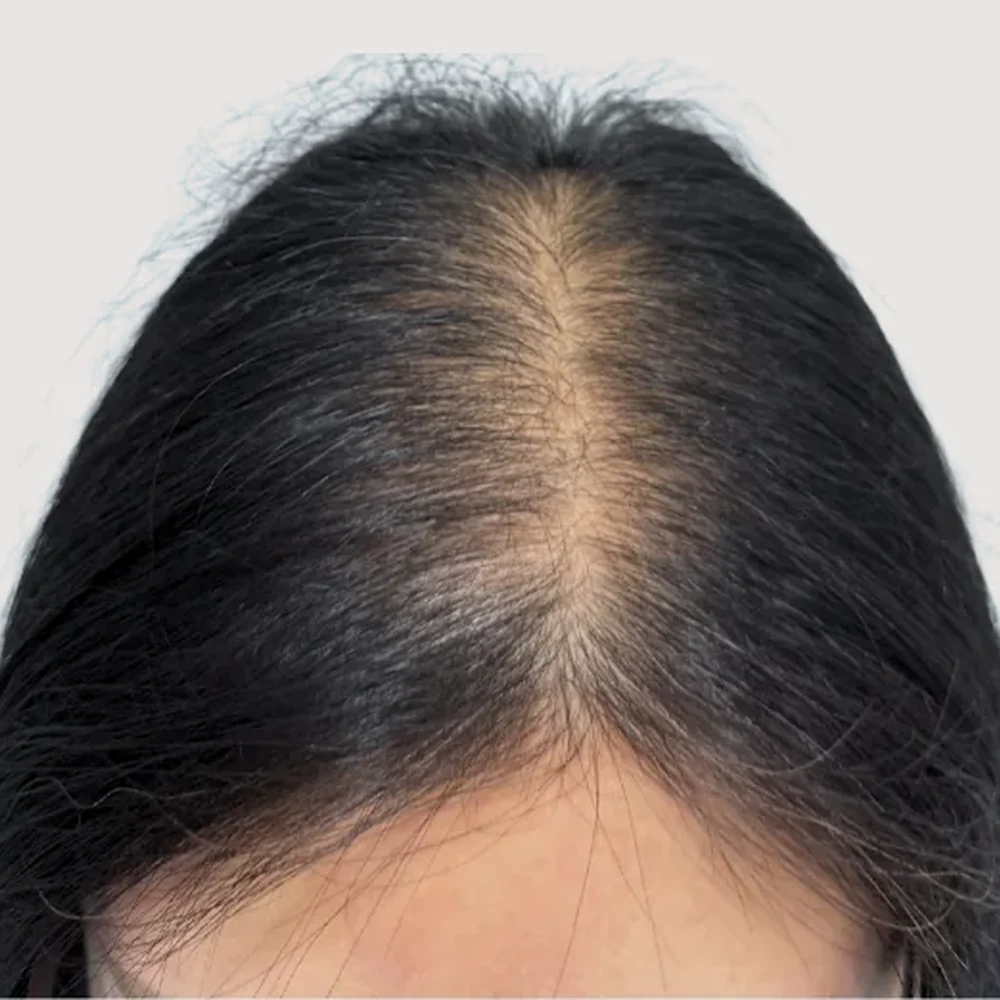
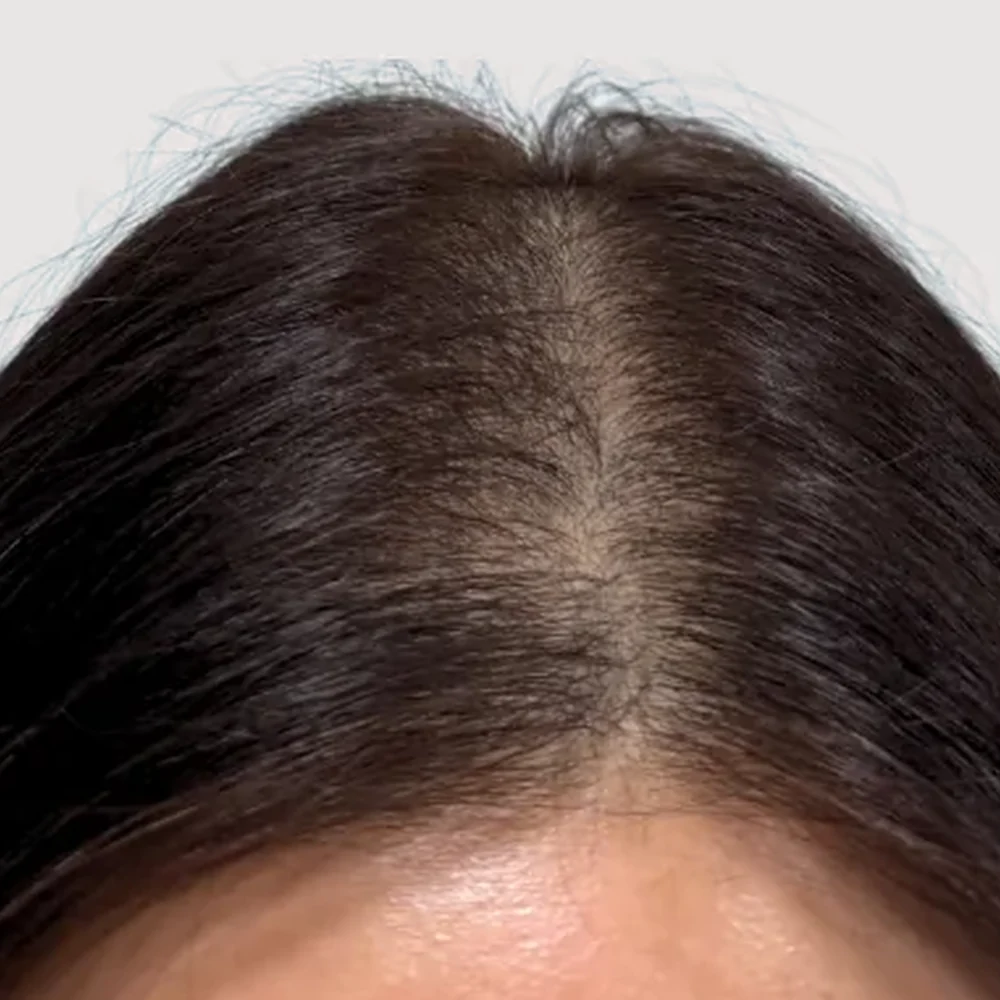
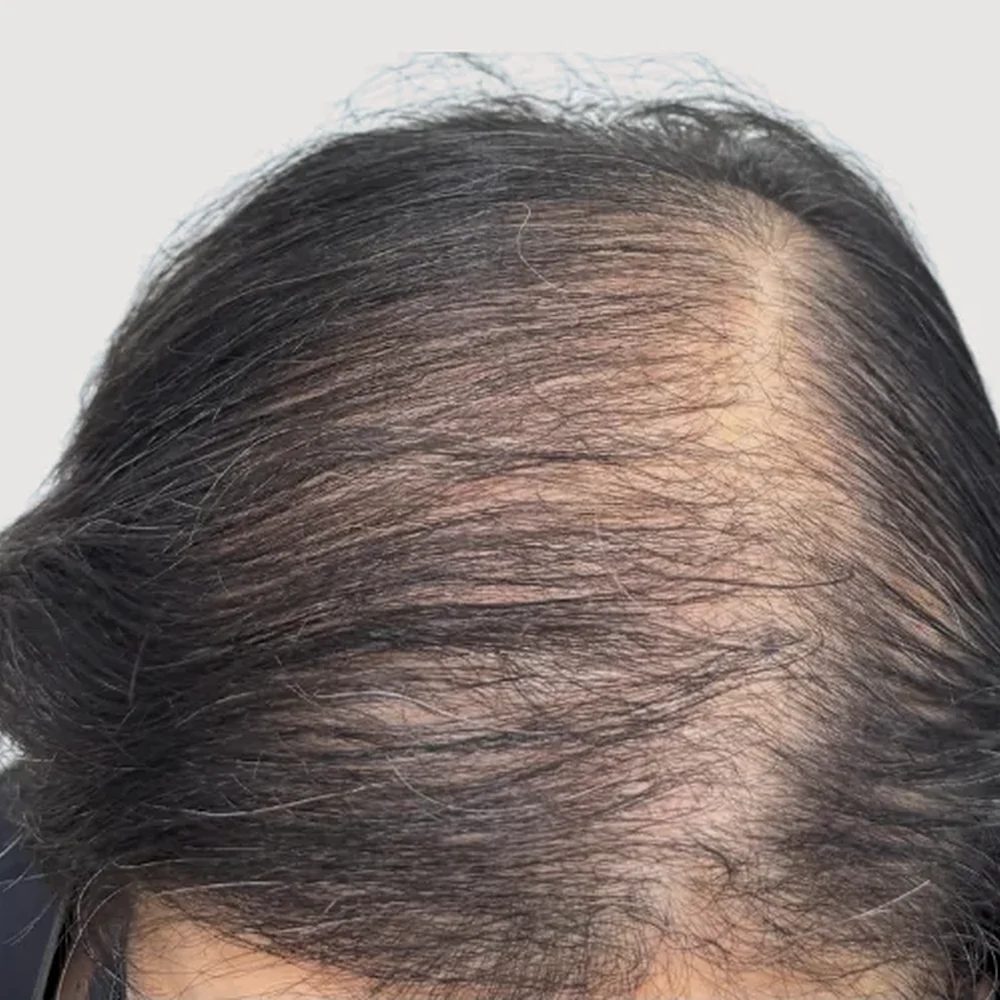
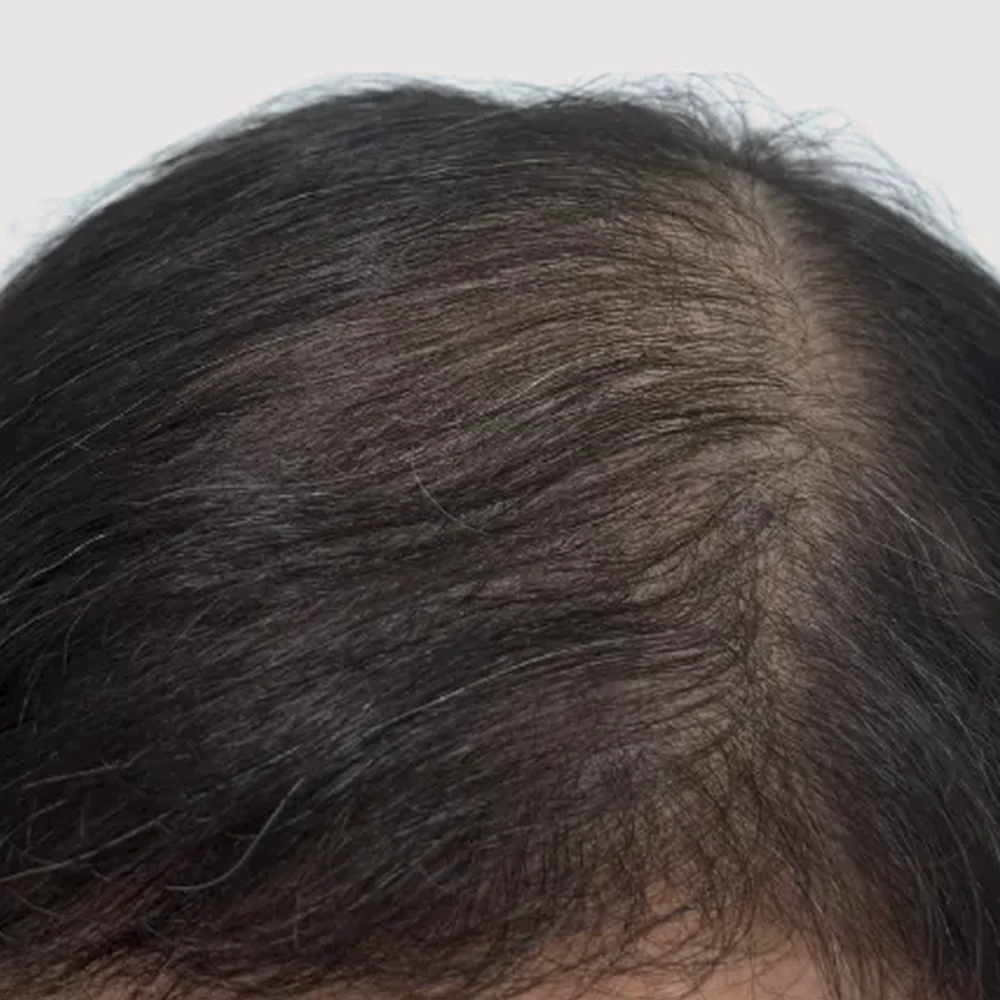
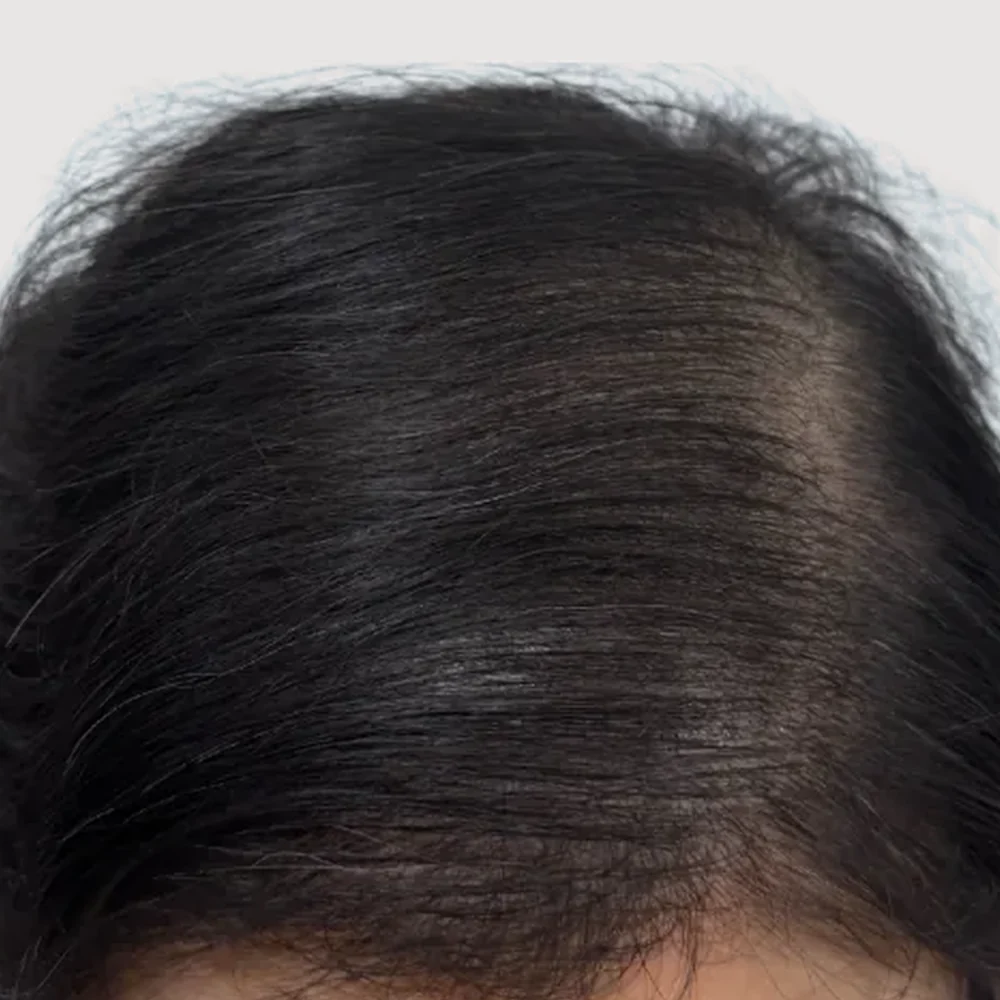
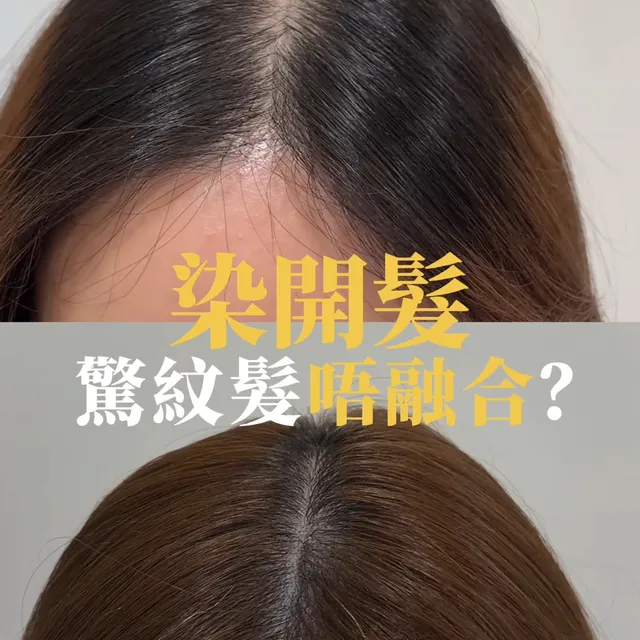
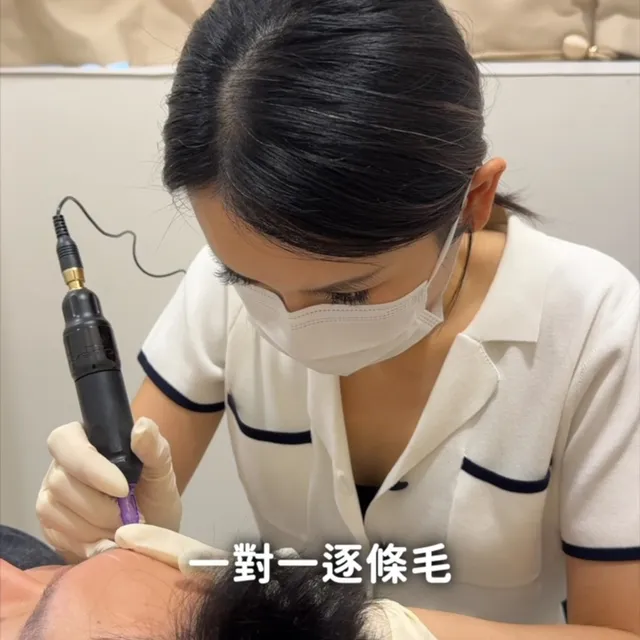
Hair on both sides of the parting had thinned, and the scalp stood out under light. We matched the colour to her natural hair and added dots along both sides of the parting, building density over three sessions so the parting looks naturally narrower.
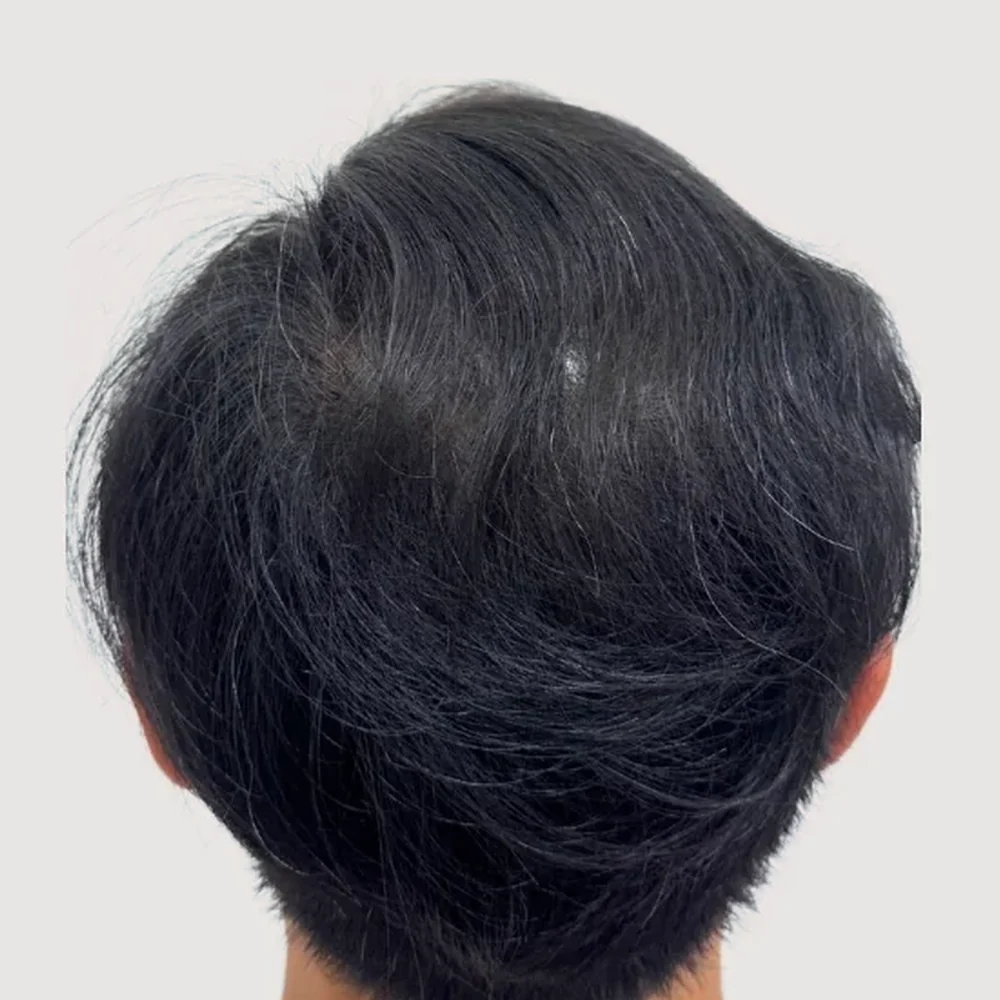
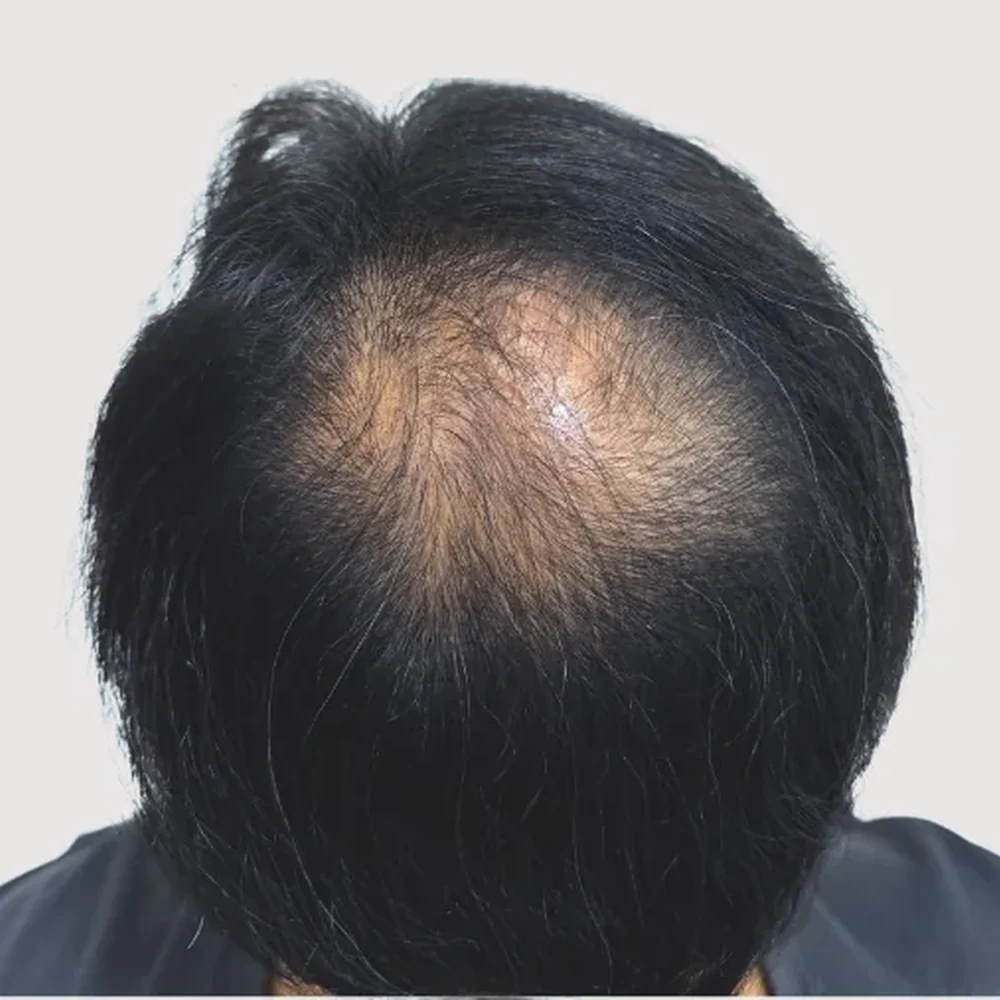
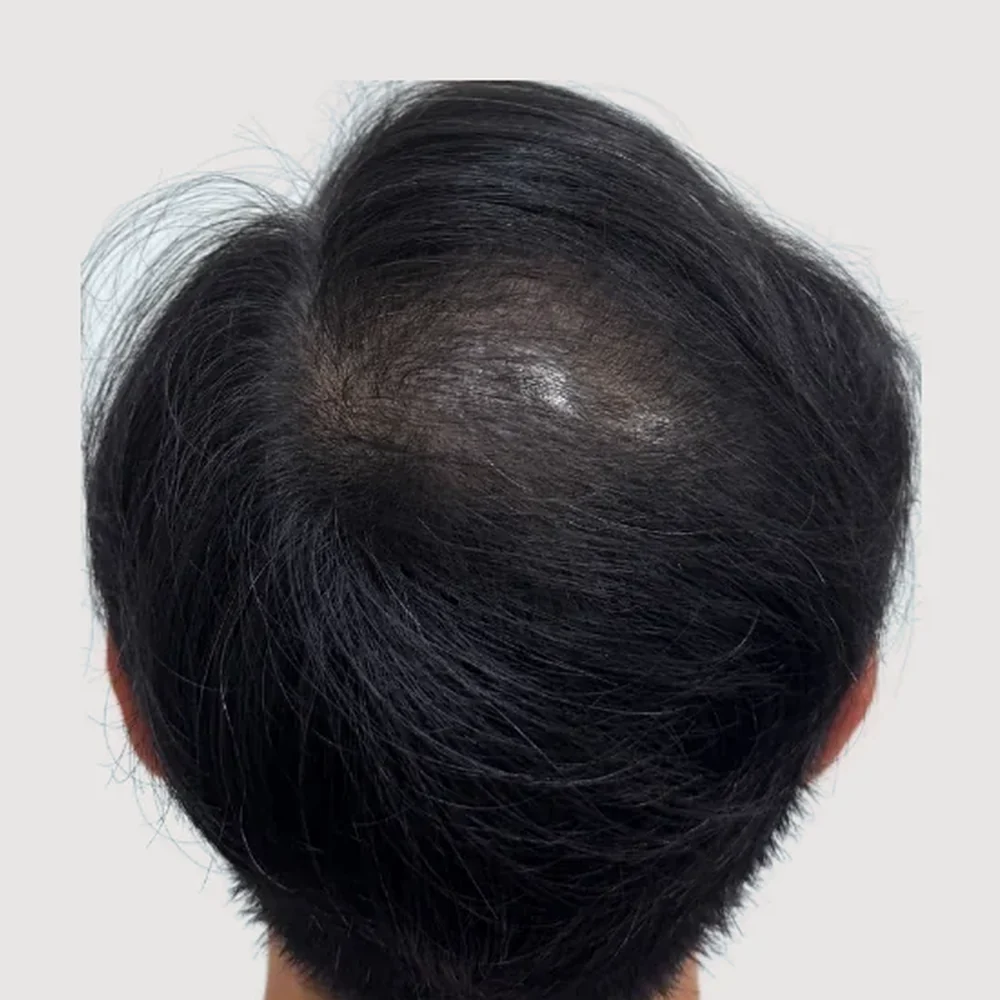
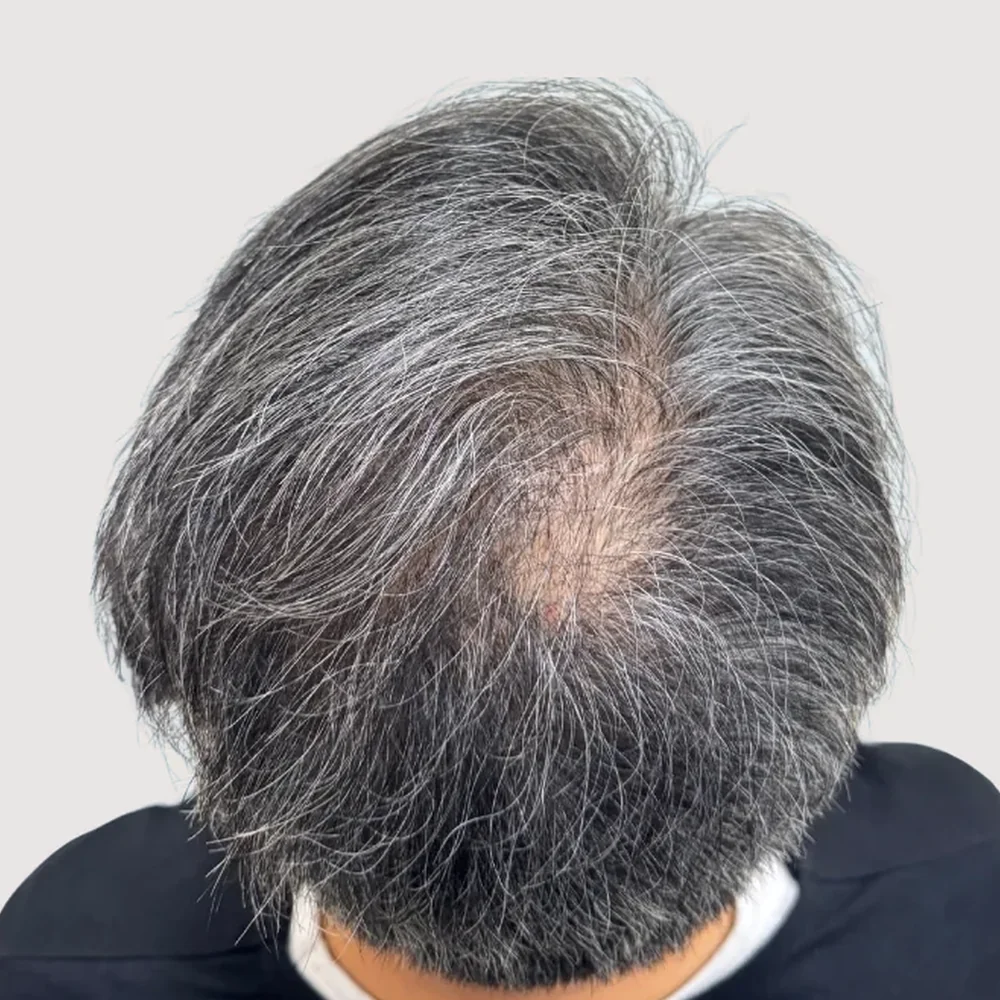
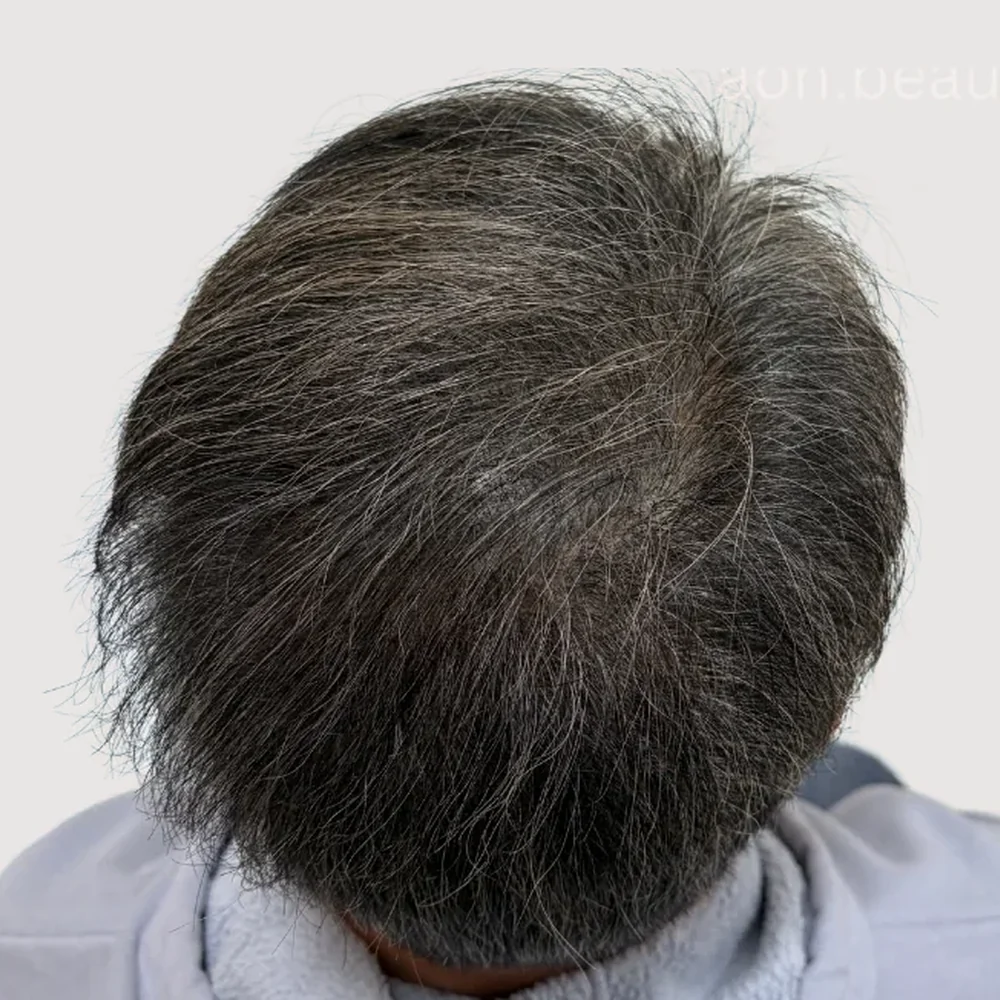
The hair at the whorl had thinned, showing a patch of scalp from above. Dots follow the whorl's natural growth direction; after treatment, much less scalp shows even unstyled, and once styled the hair looks fuller.
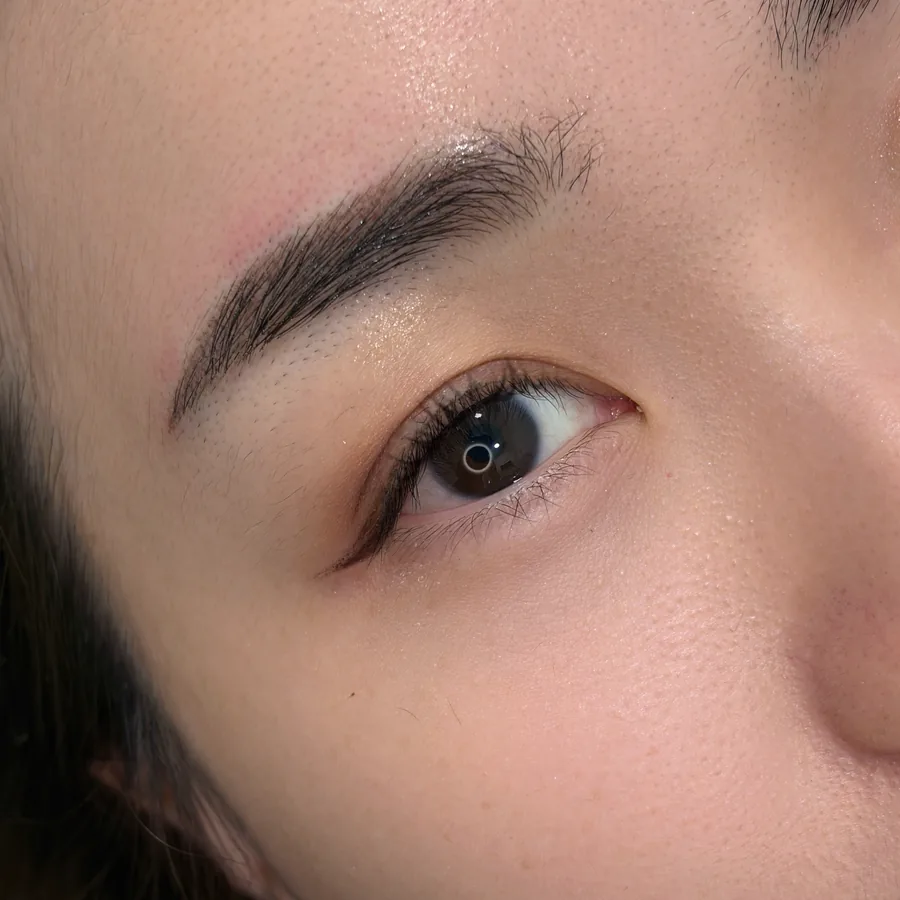
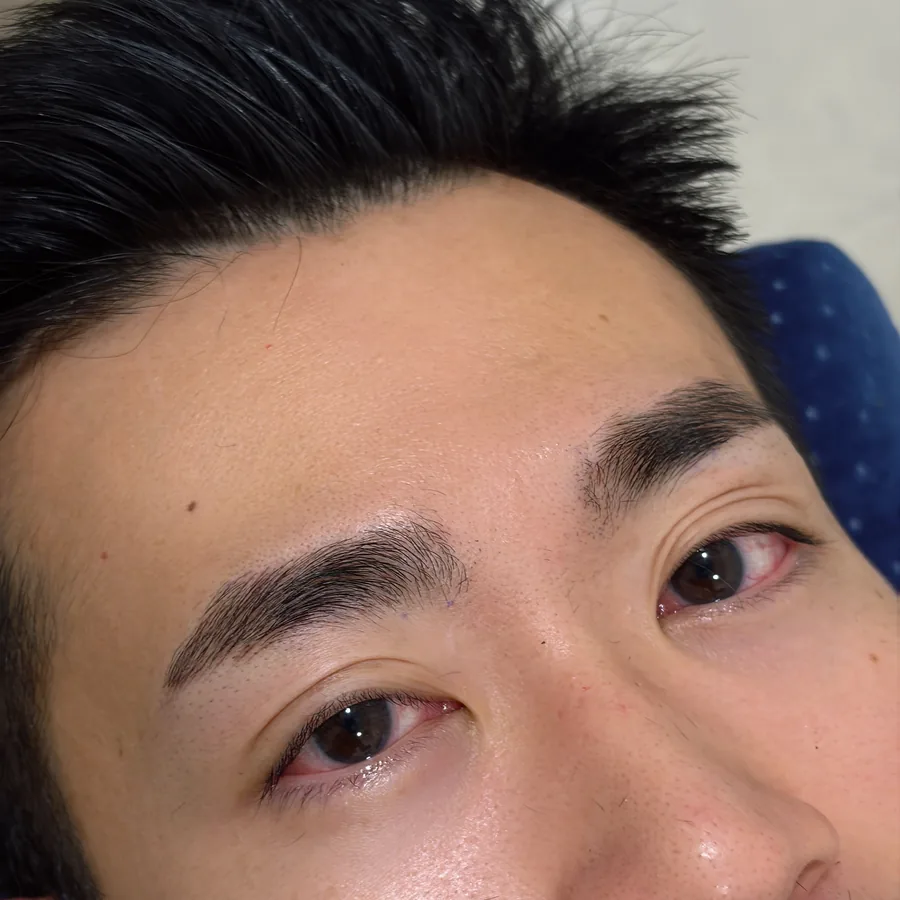
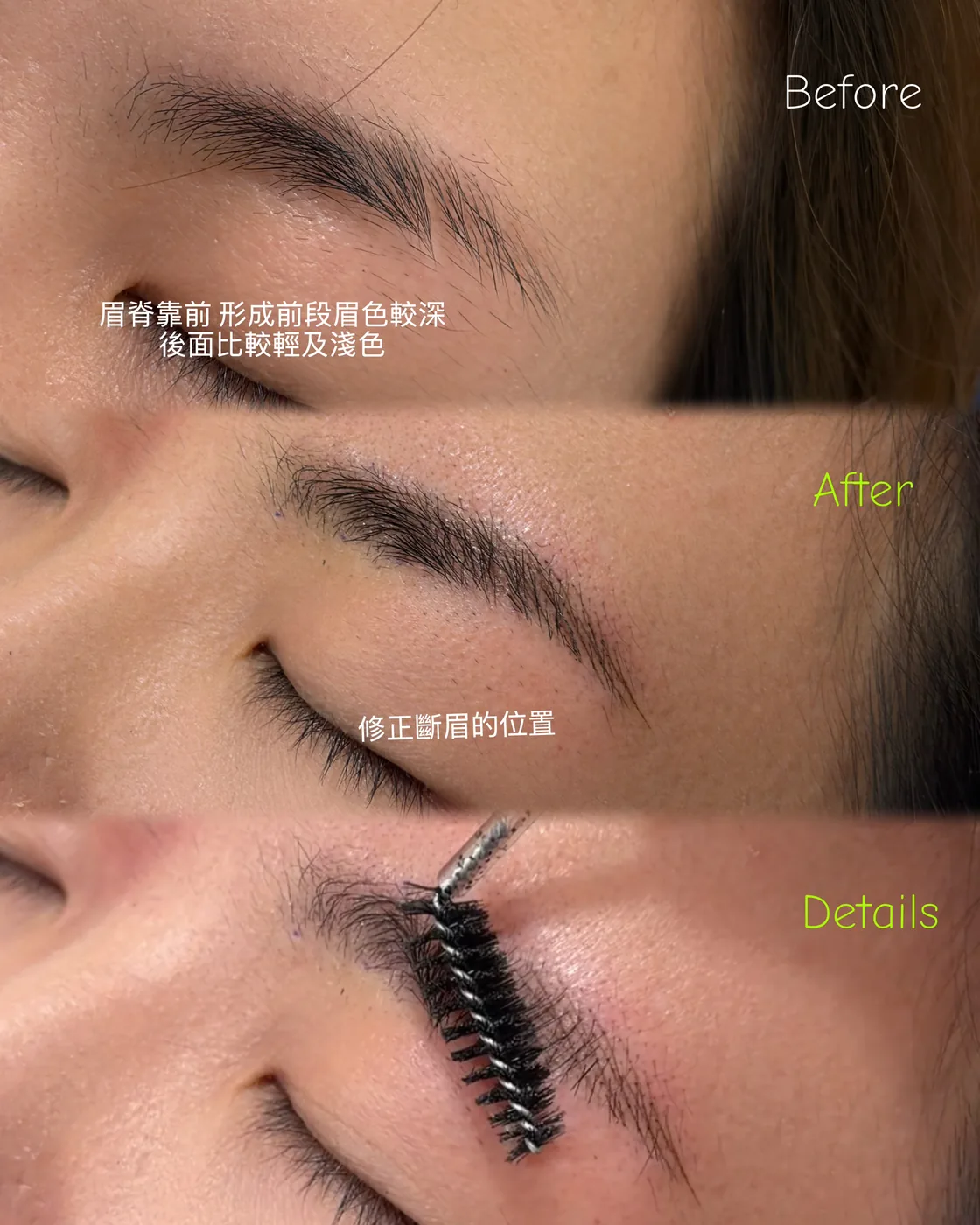
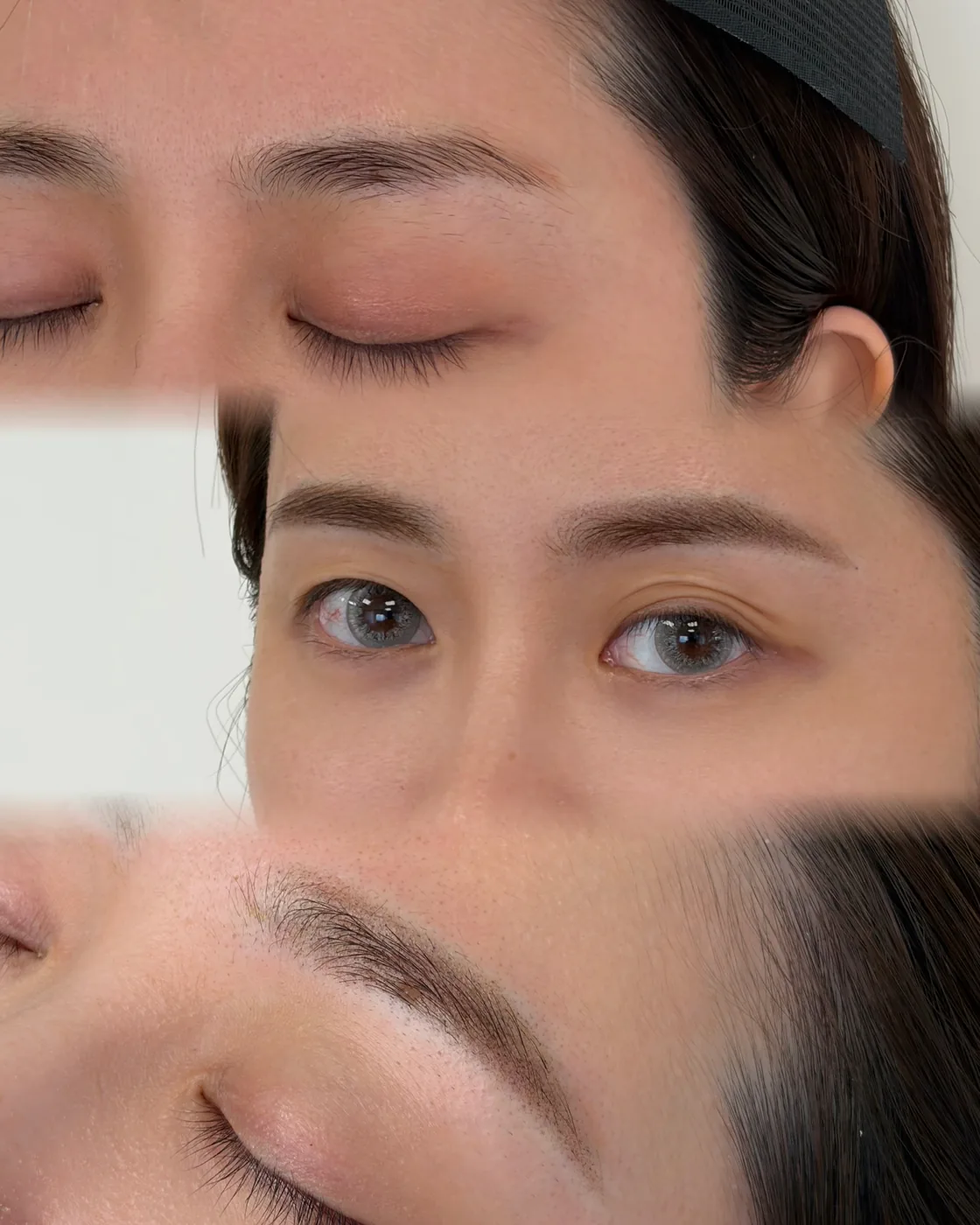
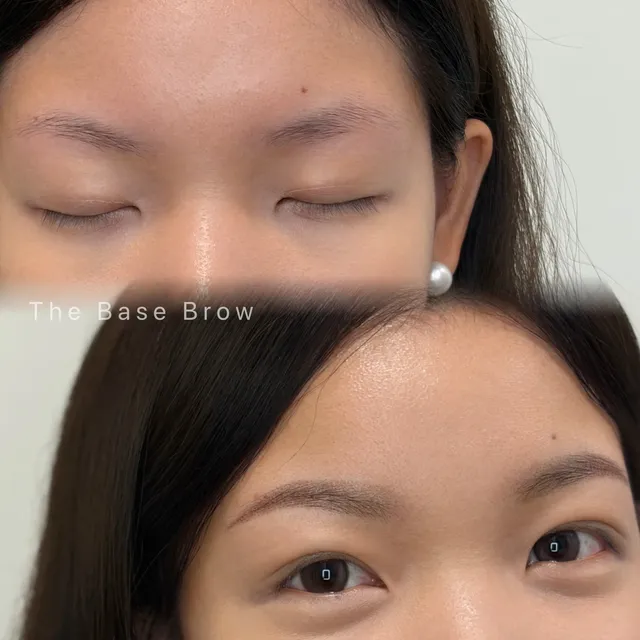
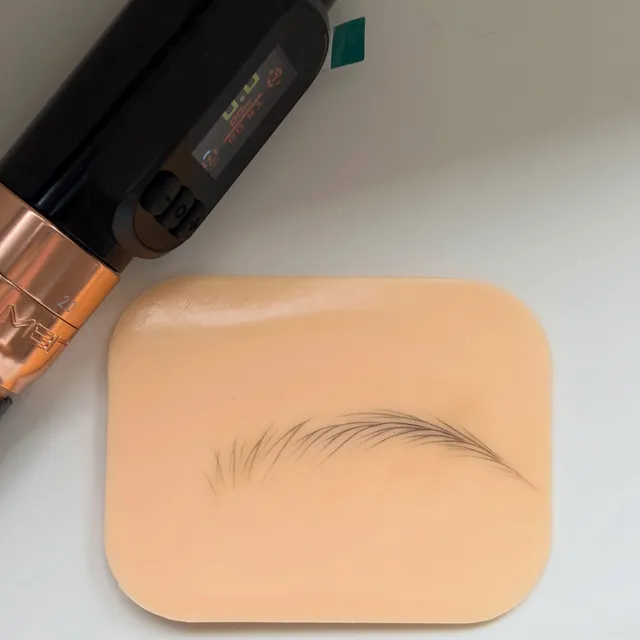
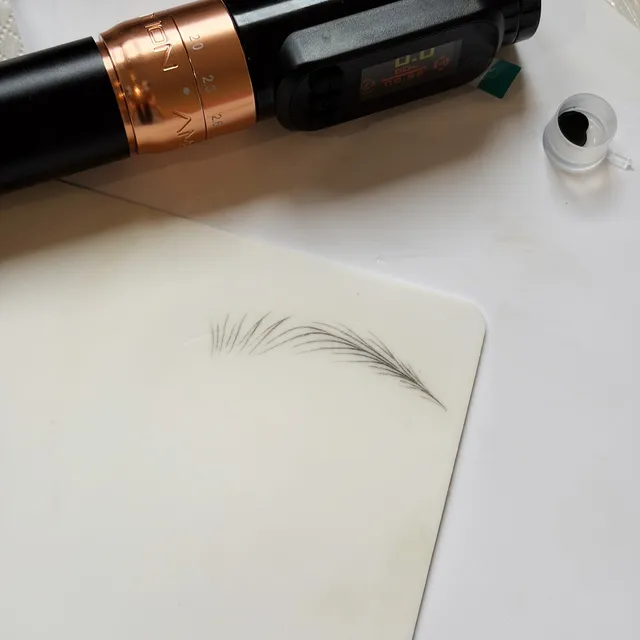
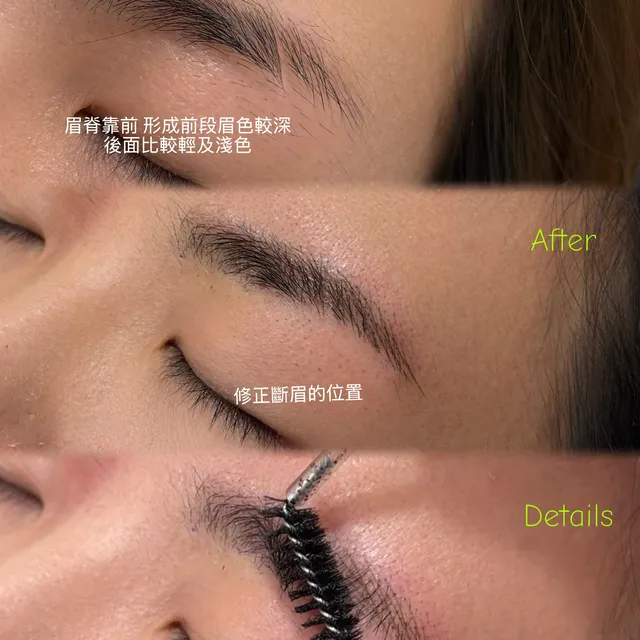
The natural brows were darker at the front, lighter at the tail, with a break in the middle. Hairstrokes added along the hair flow reconnect the broken brow and even out the depth from front to tail.
Photo notes
BeforeThe brow ridge sits forward, so the front is darker and the tail lighter and softer
With greying hair, pure black dots would look harsh. We matched the pigment to the depth of the hair so the dots blend into the salt-and-pepper hair — the parting looks narrower and still natural.
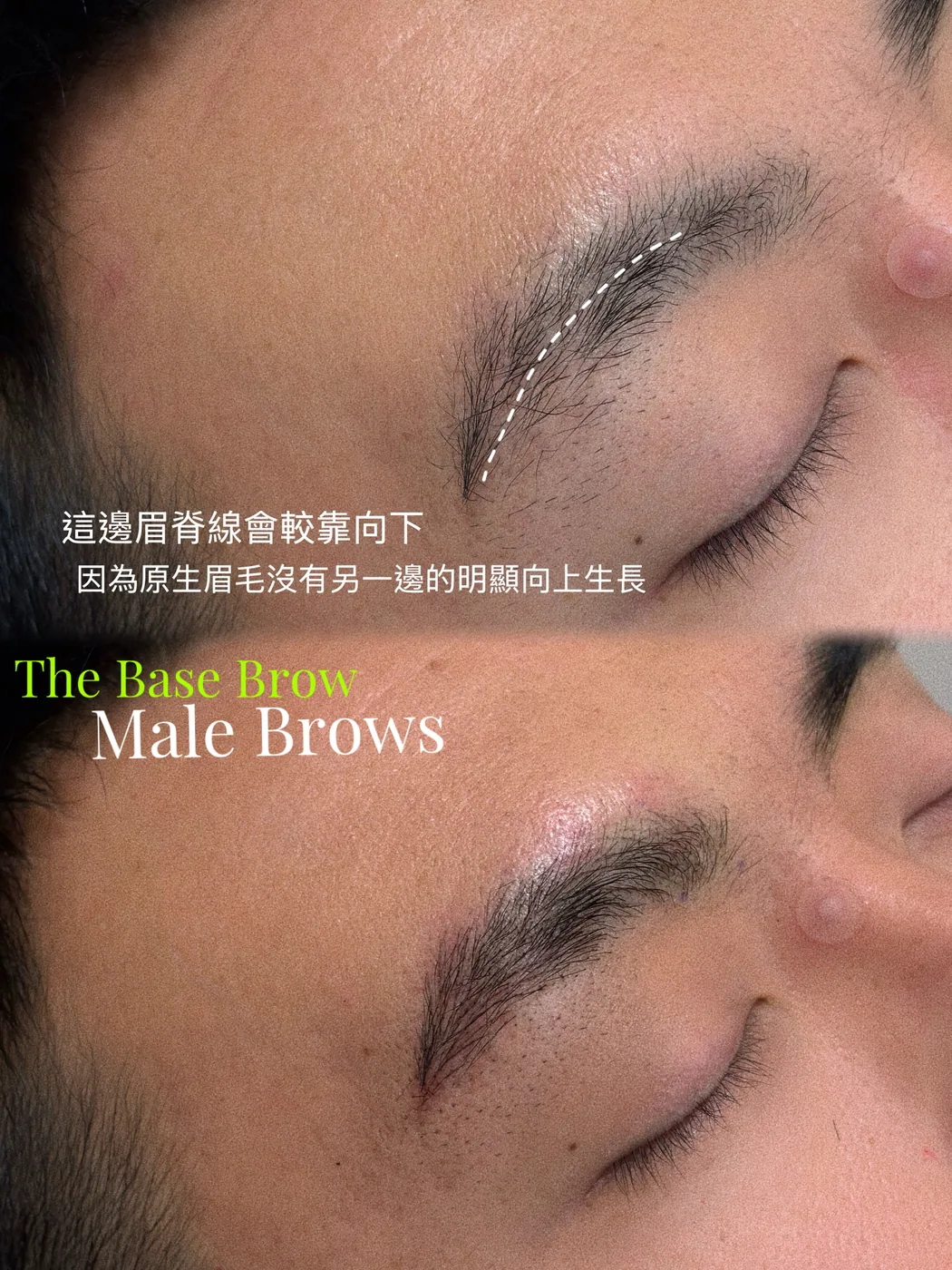
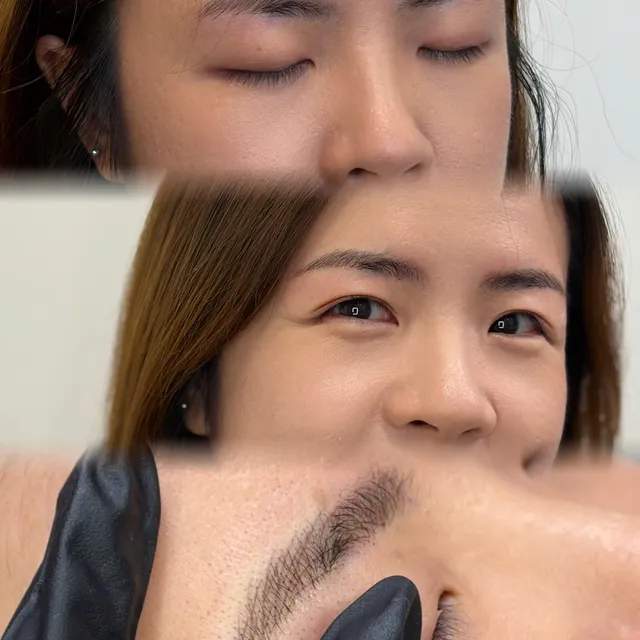
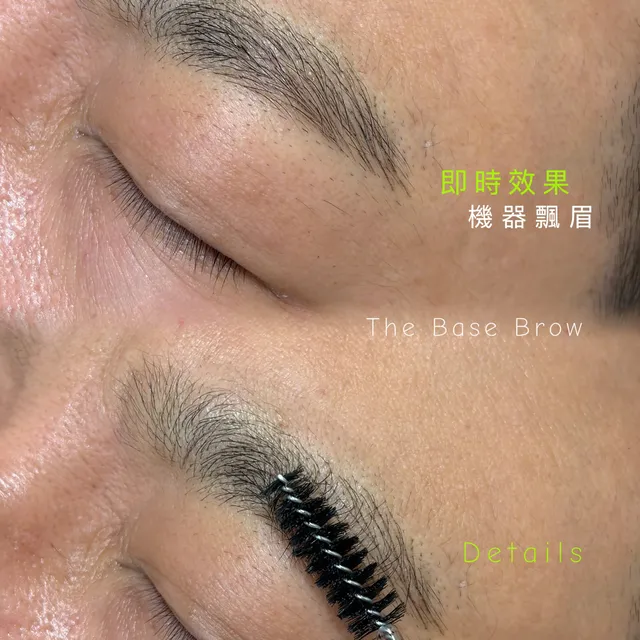
The two brows grew in different directions. Rather than drawing them identically, we designed each brow ridge to follow its own natural growth, so they look like his own.
Photo notes
Design noteThis brow ridge sits lower, because the natural hairs don't grow upward as clearly as on the other side
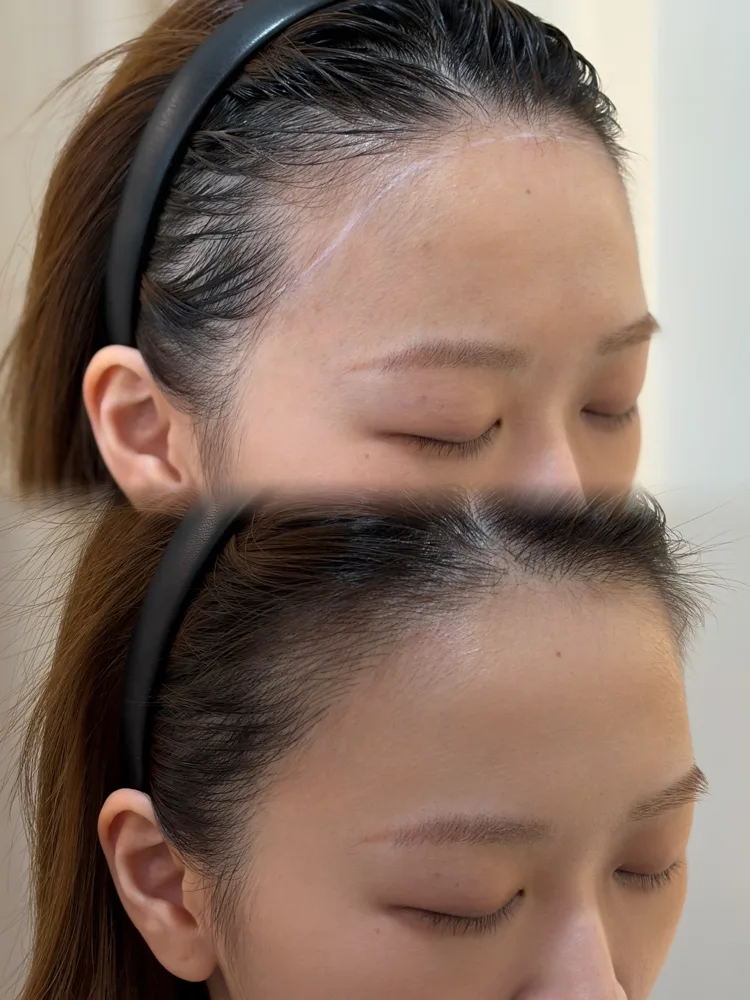
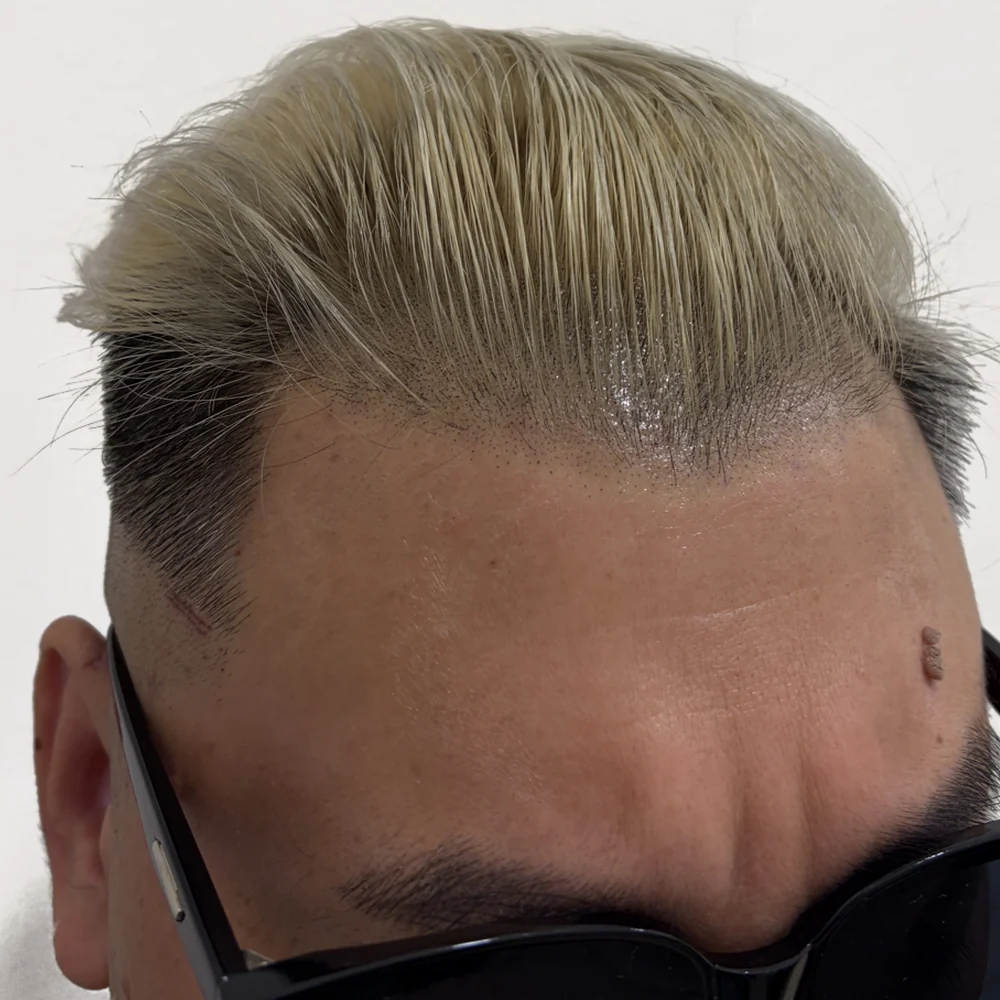
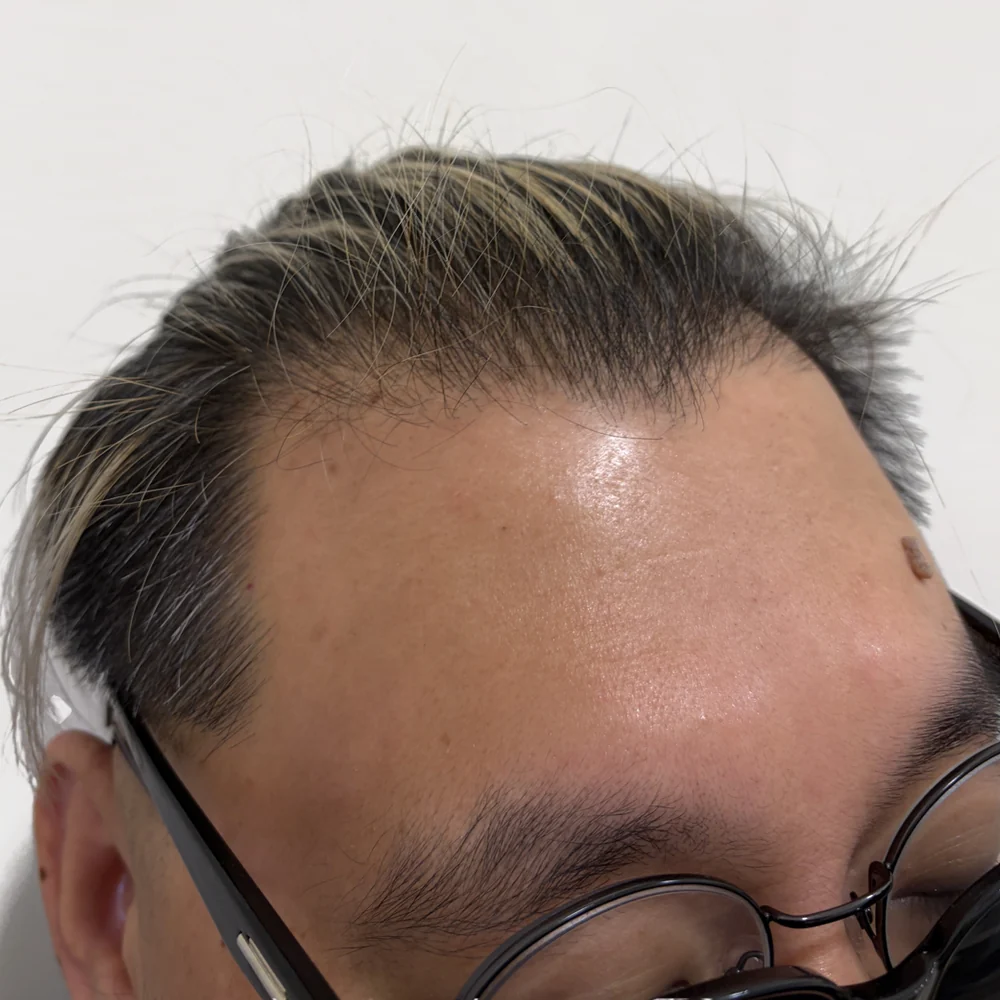
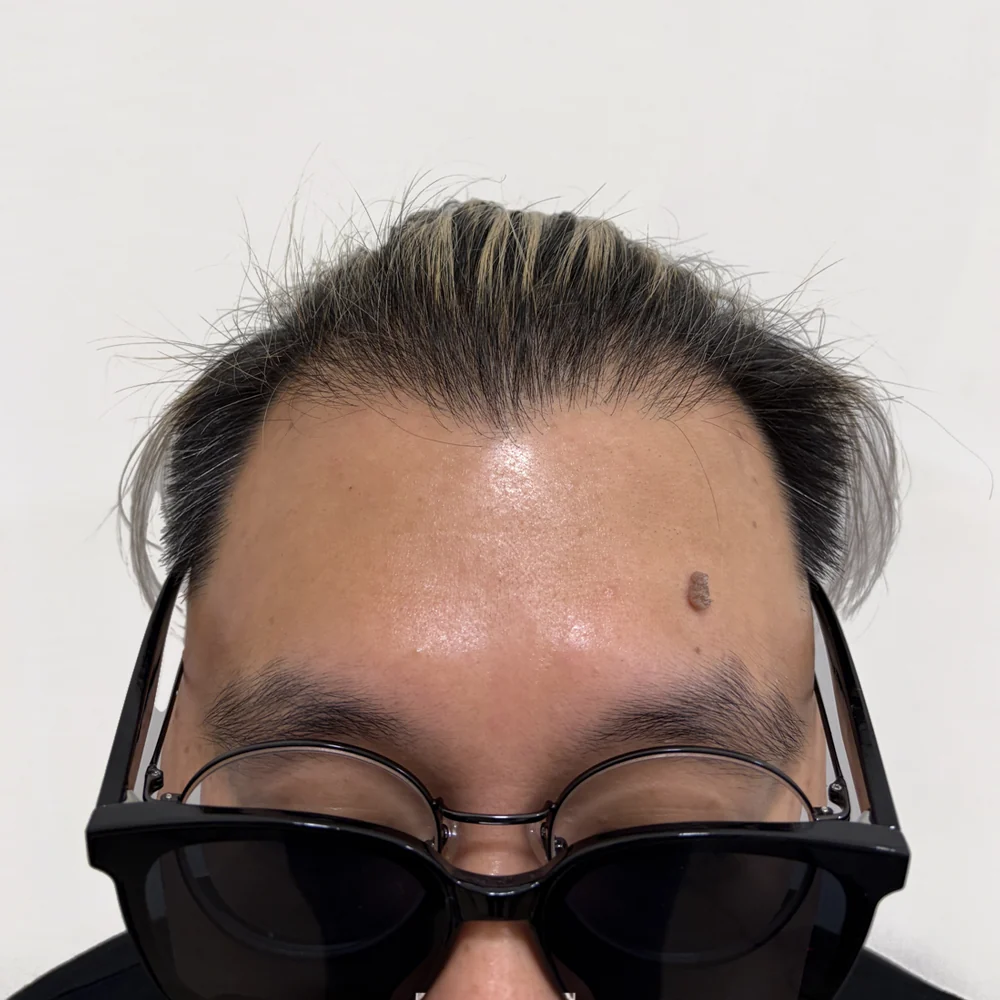
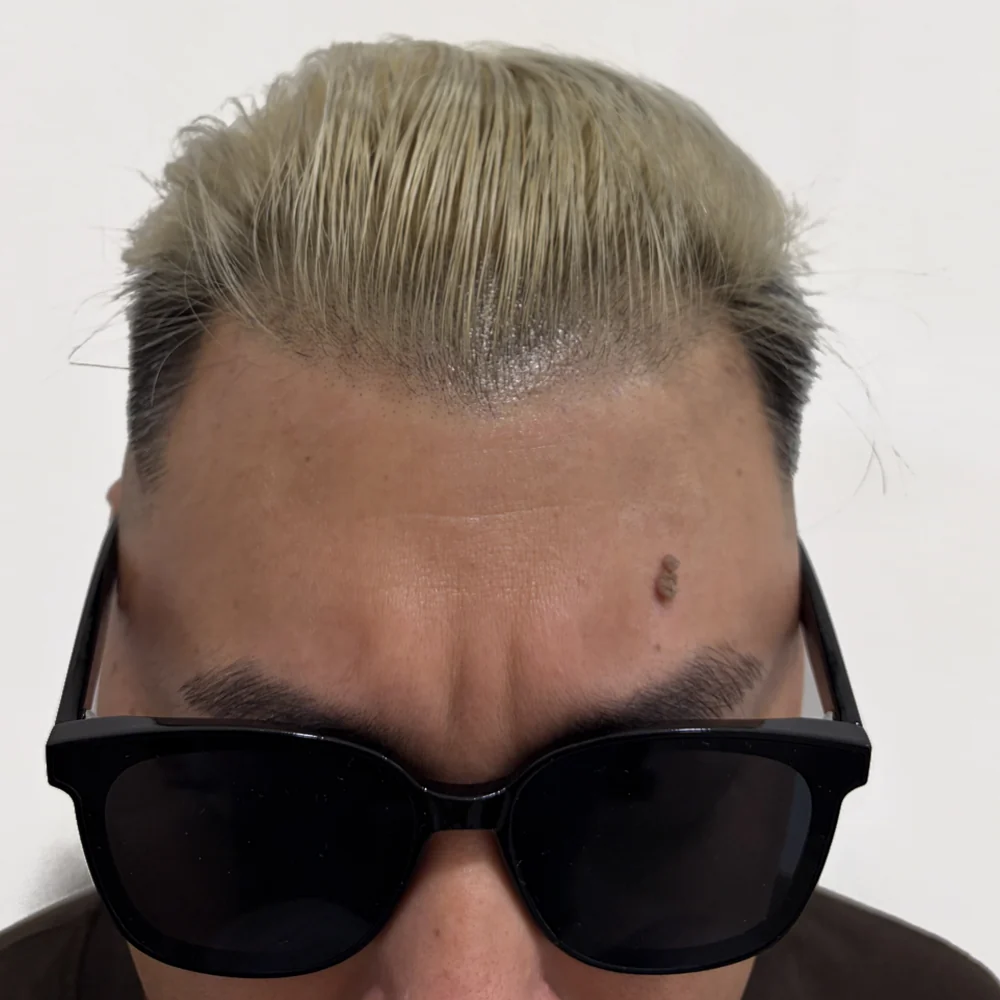
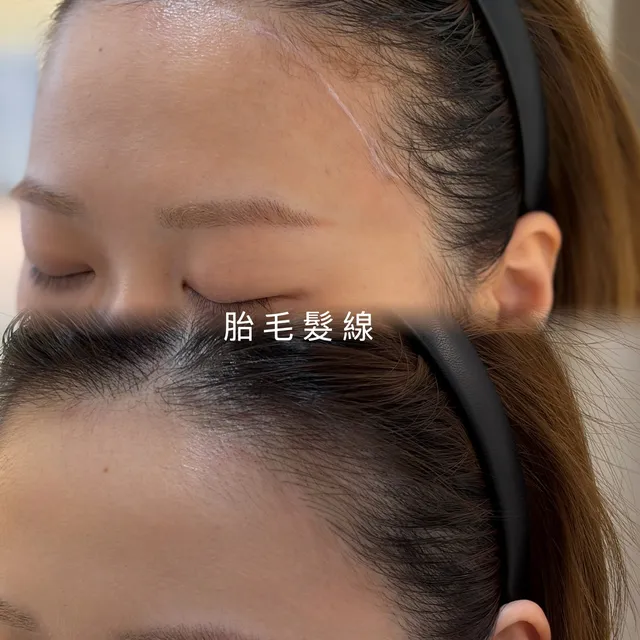
Both temples had receded, and the hairline was turning into an M shape. We first drew the hairline's position and curve for his face, began only once he approved, and filled from the hairline backwards to blend with his existing density.
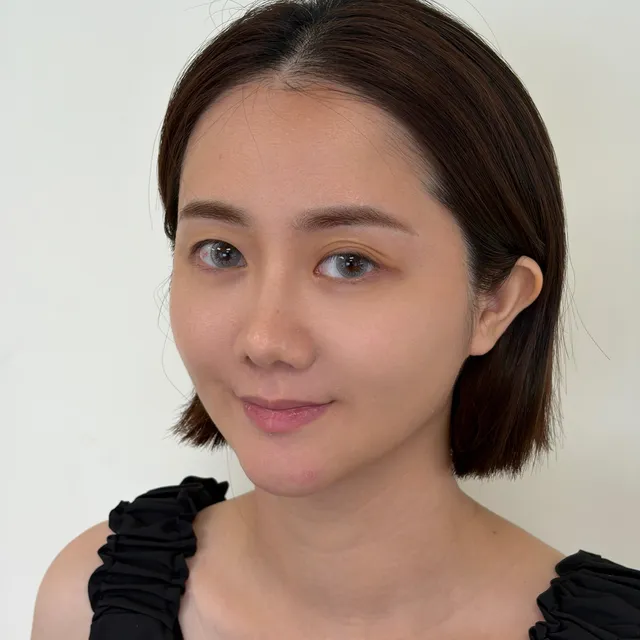
Ombre brows suit clients who like a light make-up look and don't want heavy brows. The colour shades from front to tail, still natural on bare-faced days, and works on oily skin too.
Hair around the crown and parting had thinned overall. The first session laid the base, the next two added density, and after the third the crown looks visibly fuller.
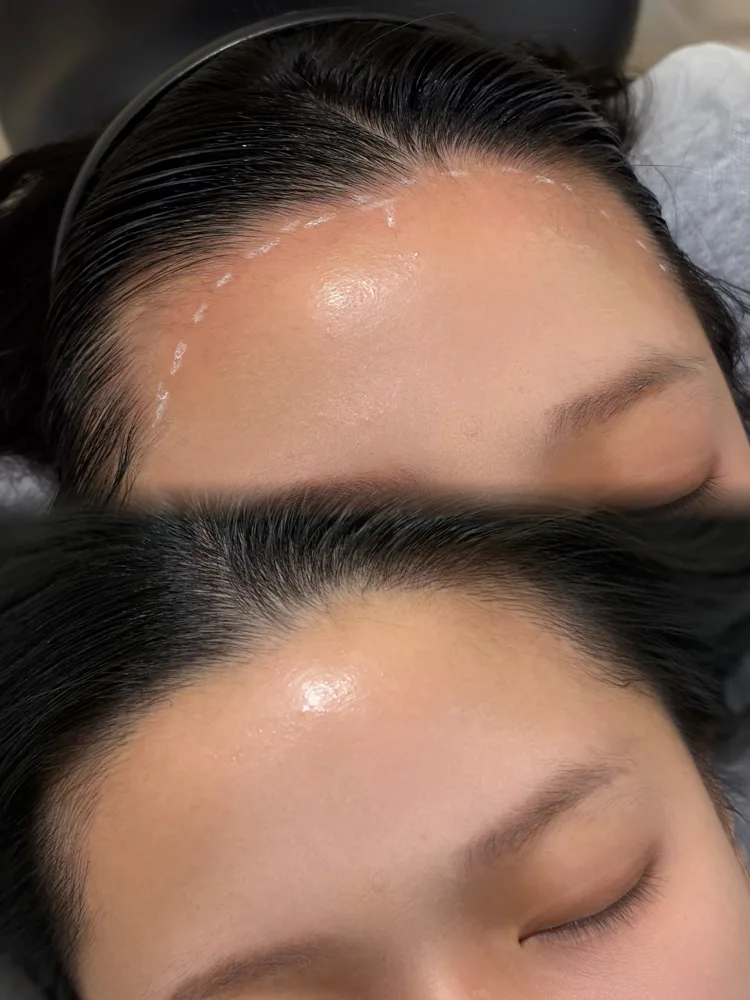
A face-framing hairline starts with the design: we draw it with a design pen to suit the face, the client confirms the position and curve in the mirror, then we colour with a feathering technique. Above is the design line; below is the result right after treatment.